

Table of Contents
- What Makes Natural Skincare Safe for Sensitive Skin
- Ingredients to Avoid for Sensitive Skin
-
Top Natural Skincare Products for Sensitive Skin
- 1. Soul Sista Scents Body Butters, Deep Hydration for Reactive Skin
- 2. Tammy Fender Roman Chamomile Tonic, Redness Reduction Focus
- 3. Annmarie Skin Care Aloe Herb Cleanser, pH-Balanced Cleansing
- 4. Eminence Organic Calm Skin Chamomile Cleanser, Certified Organic Option
- 5. Poofy Organics Flawless Face Sensitive Set, Full Routine in One Box
- 6. KORA Organics Turmeric Glow Moisturizer, Vegan and Cruelty-Free
- 7. Pai Skincare Rosehip Bioregenerate Oil, Healing and Regenerative
- 8. 100% Pure Rose Water Gentle Cleanser, Lightweight and Hydrating
- 9. Tata Harper Superkind Refining Cleanser, Gentle Exfoliation for Reactive Skin
- Product Comparison at a Glance
- Natural Skincare Routine for Sensitive Skin: Step by Step
- How to Patch Test Natural Skincare Products Correctly
- Sustainability and Packaging: What to Look For
- Which Natural Skincare Pick Is Right for You?
- Frequently Asked Questions
Last Updated: August 31, 2026
Finding the best natural skincare for sensitive skin is harder than it should be. The clean beauty market is flooded with products claiming to be gentle, yet reactive skin types know from experience that "natural" on a label means almost nothing without scrutiny. This guide covers the science behind skin barrier health, ingredients that cause trouble for sensitive skin, and nine carefully formulated natural skincare products, plus a step-by-step routine, patch testing protocol, and sustainable packaging guidance.
Quick Picks:
- Best Overall for Body: Soul Sista Scents Body Butters, deeply hydrating, 100% natural, handcrafted
- Best for Redness: Tammy Fender Roman Chamomile Tonic, chamomile-forward, balancing, calming
- Best Cleanser: Annmarie Skin Care Aloe Herb Cleanser, pH-balanced, antioxidant-rich, non-stripping
- Best Full Routine: Poofy Organics Flawless Face Sensitive Set, complete kit, parabens-free
- Best for Regeneration: Pai Skincare Rosehip Bioregenerate Oil, certified organic, potent healing
What Makes Natural Skincare Safe for Sensitive Skin
Natural skincare for sensitive skin is formulated without synthetic fragrances, harsh preservatives, or chemical irritants, relying instead on plant-based actives that work with the skin's biology. Sensitive skin reflects an underlying vulnerability in the skin's protective architecture.
Skin Barrier Health and Why It Matters
The skin barrier is the outermost layer of the epidermis, composed of lipids, ceramides, and proteins that regulate moisture retention and block environmental aggressors. When compromised, transepidermal water loss increases, leaving skin prone to dryness, redness, and inflammation. Conventional skincare products containing alcohol, sulfates, or synthetic fragrance accelerate this breakdown.
Natural formulations with emollients like shea butter and plant-based oils replenish the lipid barrier directly. Humectants such as aloe vera draw moisture into the skin without disrupting pH balance.
Microbiome-Friendly Formulations
The skin microbiome is the ecosystem of beneficial bacteria that plays a direct role in immune response, inflammation control, and barrier function. Disrupting it with harsh cleansers or over-exfoliating is a common cause of reactive skin that never settles down.
Microbiome-friendly skincare avoids broad-spectrum antibacterial agents and high-pH formulas. Prebiotic ingredients, fermented botanical extracts, and pH-balanced formulas support a healthy microbial environment.
Ingredients to Avoid for Sensitive Skin
The most common problematic ingredients include synthetic fragrance, alcohol denat, sodium lauryl sulfate, formaldehyde-releasing preservatives, and certain essential oils.
- Synthetic fragrance (listed as "fragrance" or "parfum"): the leading cause of allergic contact dermatitis
- Alcohol denat / SD alcohol: strips the lipid barrier
- Sodium lauryl sulfate (SLS): disrupts pH balance
- Formaldehyde releasers (DMDM hydantoin, quaternium-15): linked to sensitization
- Methylisothiazolinone (MI): high sensitization rate, restricted in EU rinse-off products
- Certain essential oils: peppermint, eucalyptus, citrus, and clove can be highly reactive
Ingredient Interaction Safety
A less-discussed hazard is ingredient interaction. Vitamin C and niacinamide are both beneficial, but pairing them in wrong concentrations or pH ranges can cause flushing in sensitive skin. Introduce one new product at a time, waiting at least two weeks between additions. As noted by the American Academy of Dermatology's skincare guidelines, reactive skin types benefit from the most minimal routine possible until the barrier is stable.
Top Natural Skincare Products for Sensitive Skin
The nine products below were selected based on ingredient transparency, formulation philosophy, certifications, and suitability for reactive skin. None rely on synthetic fragrance.
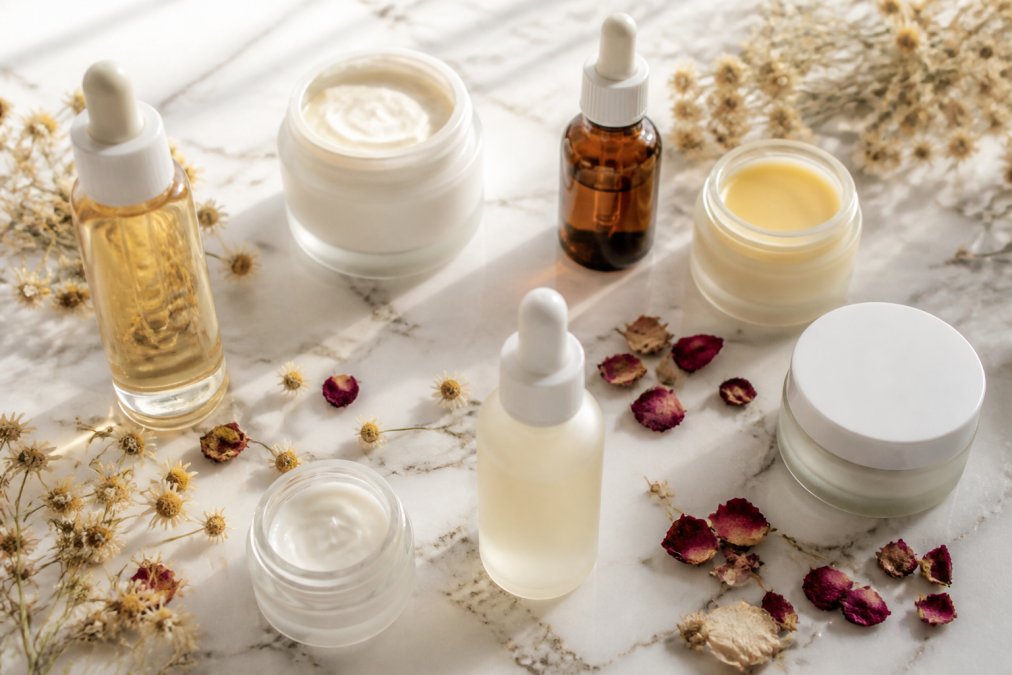
1. Soul Sista Scents Body Butters, Deep Hydration for Reactive Skin
Soul Sista Scents Body Butters are the top pick for anyone with dry, sensitive, or eczema-prone skin seeking deep hydration without synthetic additives. These whipped butters combine shea, mango, and cocoa butters to rebuild moisture and soothe itchy, reactive skin.
Best for: Dry, sensitive, and eczema-prone skin needing intensive barrier repair. One honest note: These are body formulations, not facial skincare.
Pricing depends on quantity, dates, and delivery. Visit Soulsistascents.com for the full collection.
2. Tammy Fender Roman Chamomile Tonic, Redness Reduction Focus
Redness that won't quit often signals persistent low-grade inflammation. Roman Chamomile is one of the most clinically recognized botanical extracts for calming that response. Tammy Fender's tonic leads with this ingredient, making it a purposeful choice rather than a marketing decision.
Best for: Individuals prone to flushing, redness, and visible inflammation. Pricing: $70.00 (one-time purchase).
3. Annmarie Skin Care Aloe Herb Cleanser, pH-Balanced Cleansing
Most cleansers for sensitive skin either strip too much or leave residue. The Annmarie Aloe Herb Cleanser hits the balance better than most. It blends aloe vera and calendula with fatty acids to cleanse without disrupting the skin's natural pH.
Best for: Sensitive skin types who need a cleanser that nourishes while it cleans.
4. Eminence Organic Calm Skin Chamomile Cleanser, Certified Organic Option
Eminence Organics uses certified organic, Biodynamic ingredients, a distinction that goes beyond standard organic certification by considering the full agricultural ecosystem. Their Calm Skin Chamomile Cleanser is formulated for easily irritated, redness-prone skin.
Best for: Fine-pored, redness-prone skin that reacts to most conventional formulas.
5. Poofy Organics Flawless Face Sensitive Set, Full Routine in One Box
Building a sensitive skin routine from scratch is difficult; every new product is a potential reaction. The Poofy Organics Flawless Face Sensitive Set removes that friction by bundling a cleanser, face cream, and hydrating oil into a cohesive kit. Everything is handcrafted in small batches, free from parabens, sulfates, and synthetic fragrance.
Best for: Anyone building a new sensitive skin routine from zero. Pricing: $96.00 for the full set.
6. KORA Organics Turmeric Glow Moisturizer, Vegan and Cruelty-Free
Turmeric has a strong reputation for its anti-inflammatory properties. KORA Organics has translated that into a certified organic moisturizer designed to address redness and moisture imbalance. The formula is vegan and cruelty-free.
Best for: Sensitive skin with redness and dryness, particularly for those prioritizing vegan and cruelty-free certification.
7. Pai Skincare Rosehip Bioregenerate Oil, Healing and Regenerative
Pai Skincare's Rosehip Bioregenerate Oil remains one of the most potent single-ingredient treatments for reactive skin. Rosehip oil is rich in essential fatty acids that support lipid barrier repair and has well-documented healing properties for scarring, uneven texture, and chronic dryness. The formula is certified organic, sustainable, vegan, and cruelty-free.
Best for: Sensitive skin seeking targeted repair for scarring, texture, and barrier damage.
According to research published by the National Institutes of Health on rosehip oil and skin health, rosehip seed oil contains significant concentrations of linoleic acid, commonly deficient in eczema-prone and reactive skin types.
8. 100% Pure Rose Water Gentle Cleanser, Lightweight and Hydrating
For combination-sensitive or warmer climates, the 100% Pure Rose Water Gentle Cleanser offers a lightweight alternative. Rose water has natural soothing properties and a mild pH. The formula is designed to hydrate as it cleanses.
Best for: Sensitive skin that runs combination or feels easily overwhelmed by heavier formulas.
9. Tata Harper Superkind Refining Cleanser, Gentle Exfoliation for Reactive Skin
Gentle exfoliation is misunderstood in sensitive skincare. Tata Harper's Superkind Refining Cleanser is designed specifically for reactive skin that still needs occasional exfoliation to prevent congestion. The exfoliating action is mild enough for sensitive skin types who have never tolerated exfoliation before.
Best for: Reactive skin that needs gentle exfoliation without the risk of a flare. Pricing: $88.00.
Product Comparison at a Glance
| Product | Best For | Key Ingredient | Price |
|---|---|---|---|
| Soul Sista Scents Body Butters | Dry, eczema-prone body skin | Shea, mango, cocoa butter | See website |
| Tammy Fender Chamomile Tonic | Redness reduction | Roman Chamomile | $70.00 |
| Annmarie Aloe Herb Cleanser | pH-balanced daily cleansing | Aloe vera, calendula | Check website |
| Eminence Chamomile Cleanser | Organic certified cleansing | Chamomile, Biodynamic botanicals | Check website |
| Poofy Organics Sensitive Set | Full routine, zero guesswork | Plant-based blend | $96.00 |
| KORA Organics Turmeric Moisturizer | Vegan redness + dryness | Turmeric, organic actives | Check website |
| Pai Rosehip Bioregenerate Oil | Barrier repair, scarring | Rosehip seed oil | Check website |
| 100% Pure Rose Water Cleanser | Lightweight hydration | Rose water | Check website |
| Tata Harper Superkind Cleanser | Gentle exfoliation | Hypoallergenic botanicals | $88.00 |
Natural Skincare Routine for Sensitive Skin: Step by Step
A natural skincare routine for sensitive skin should prioritize barrier support, minimal ingredient exposure, and consistent application. The most effective routines for reactive skin are also the simplest.
Morning Routine:
- Cleanse with a pH-balanced, non-foaming cleanser (rinse with lukewarm water)
- Apply a calming toner or facial mist to restore hydration
- Layer a lightweight moisturizer with emollient and humectant properties
- Finish with a mineral SPF; chemical UV filters are a common irritant for reactive skin
Evening Routine:
- Double cleanse if wearing SPF or makeup: oil cleanse first, then gentle cleanser
- Apply any treatment serums (introduce one at a time)
- Seal with a nourishing facial oil or richer night moisturizer
- For body, apply a body butter while skin is still slightly damp
Adapting Your Routine Through Seasonal Transitions
Seasonal transitions are overlooked triggers for sensitive skin flares. Moving from summer humidity into dry winter air increases transepidermal water loss dramatically. Swap your lightweight summer moisturizer for a richer emollient in fall, and add a facial oil through the coldest months.
How to Patch Test Natural Skincare Products Correctly
Patch testing is applying a small amount of a new product to an inconspicuous area and monitoring for a reaction before full application. Every new product should be patch tested before use on the face.
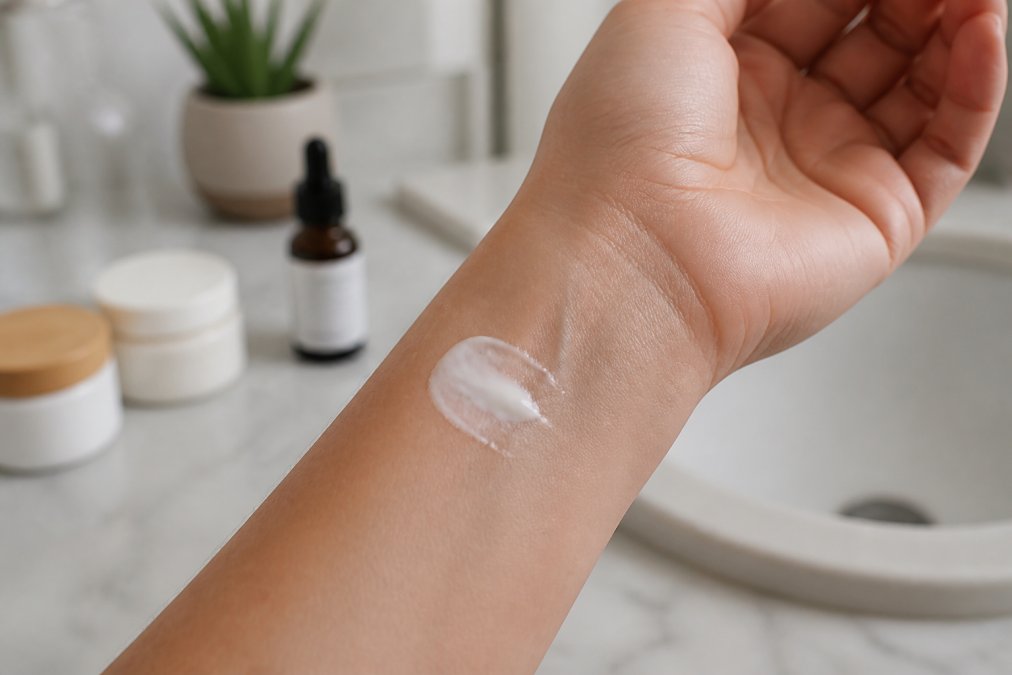
How to patch test correctly:
- Apply a small amount of product to the inside of your wrist or the bend of your elbow
- Leave it on for 24 hours without washing the area
- Check for redness, itching, swelling, or any change in the skin
- Wait a full 48 hours before checking again; some reactions are delayed
- Only if no reaction occurs after 48 hours should you apply the product to your face
- Introduce one new product per two-week period maximum
The FDA's guidance on cosmetic safety and skin reactions notes that contact dermatitis from cosmetic products is one of the most common skin conditions reported to dermatologists.
Sustainability and Packaging: What to Look For
Packaging directly affects product integrity for sensitive skin. Formulas packaged in clear glass or wide-mouthed jars degrade faster when exposed to light and air, which can alter the efficacy of sensitive botanical actives.
The most skin-protective packaging choices are:
- Dark glass or opaque bottles for oils and vitamin-rich formulas
- Airless pump dispensers for serums and moisturizers to minimize oxidation
- Small-batch production to ensure freshness
According to the Environmental Protection Agency's guidelines on sustainable packaging, reducing packaging waste in consumer goods is a measurable environmental priority, and the beauty industry is one of the largest contributors to single-use plastic waste.
Which Natural Skincare Pick Is Right for You?
The right choice depends on your primary concern, the body area you're treating, and how much routine complexity you're ready to manage.
| If your main concern is... | Start with... |
|---|---|
| Dry, reactive body skin | Soul Sista Scents Body Butters |
| Facial redness and inflammation | Tammy Fender Roman Chamomile Tonic |
| Building a new routine from scratch | Poofy Organics Flawless Face Sensitive Set |
| Barrier repair and regeneration | Pai Skincare Rosehip Bioregenerate Oil |
| Gentle exfoliation without flares | Tata Harper Superkind Refining Cleanser |
| Organic certification as a priority | Eminence Calm Skin Chamomile Cleanser |
| Vegan and cruelty-free moisturizer | KORA Organics Turmeric Glow Moisturizer |
A common mistake is choosing a product based on what worked for someone else's skin. Sensitive skin is highly individual; what calms one person's redness can trigger another person's reaction. The patch testing protocol is not optional, it's the only reliable way to know whether a product will work for your specific skin. Ingredient lists matter more than brand reputation. Read the full list, not just the hero ingredient on the front of the bottle.
Frequently Asked Questions
Q: What is the best natural skincare for extremely sensitive skin?
A: For extremely sensitive skin, the safest natural skincare products are fragrance-free, hypoallergenic, and built around soothing botanical extracts like chamomile, aloe vera, and calendula. Look for pH-balanced formulas that protect the skin barrier and avoid synthetic dyes, sulfates, and alcohol. Products certified organic and dermatologist-tested add an extra layer of confidence. Always patch test before applying anything new to your full face, and introduce one product at a time so you can identify any trigger.
Q: Are essential oils safe for sensitive skin?
A: Most essential oils are not recommended for reactive or sensitive skin. Even plant-derived oils like lavender, peppermint, and citrus can trigger inflammation, contact dermatitis, or allergic reactions in sensitive individuals. If a natural skincare product lists essential oils in its formula, it is one of the key ingredients to avoid for sensitive skin. Opt instead for products that use gentle botanical extracts, non-fragrant plant oils such as rosehip or jojoba, and are explicitly labeled essential oil-free.
Q: How can I tell if a natural skincare product is safe for sensitive skin?
A: Check the ingredient list for common irritants: synthetic fragrance, alcohol denat., sulfates, parabens, and essential oils. Look for certifications such as USDA Organic, EWG Verified, or cruelty-free seals, which indicate cleaner formulations. Claims like hypoallergenic, non-comedogenic, and dermatologist-tested are helpful signals. Patch testing on your inner arm for 24 to 48 hours before full use is the most reliable method. If redness, itching, or swelling appears, discontinue immediately.
Q: How do I build a natural skincare routine for sensitive skin without overwhelming it?
A: Start with three steps: a gentle, pH-balanced cleanser, a hydrating serum or toner with calming agents like niacinamide or chamomile, and a fragrance-free moisturizer rich in emollients and humectants. Add one product at a time, waiting at least two weeks between introductions. Avoid layering actives like AHAs and retinol without guidance. A minimal natural skincare routine for sensitive skin does far less damage than a complex one, and consistency matters more than quantity of products.
Q: Does natural skincare actually work better for sensitive skin than conventional products?
A: Natural skincare is not automatically gentler, but it often avoids the synthetic fragrances, sulfates, and harsh preservatives that most commonly trigger sensitive skin reactions. Plant-based formulas built around soothing agents like aloe vera, calendula, and rosehip oil can support the skin barrier and reduce transepidermal water loss without the irritants found in many conventional products. The key is reading ingredient labels carefully rather than assuming 'natural' means safe for every skin type.
Reactive skin is demanding. Finding a routine that holds, through seasonal shifts, travel, and daily stress, takes time and the right formulations. Soul Sista Scents Body Butters offer a genuinely clean, deeply hydrating starting point for body care, built on shea, mango, and cocoa butters with no synthetic additives. Explore the full collection at Soulsistascents.com and find the formulation that works for your skin.
This article was written using GrandRanker